
Best Areas to Live in Auckland: A Guide for Newcomers
Want to know the best areas to live in Auckland? Why Auckland isn't the "small city" it's often pictured as, plus a newcomer's guide to its 8 regions, covering commute, cost, and lifestyle.
HOME SEARCHRELOCATION GUIDANCE
Nicki
8/4/20269 min read
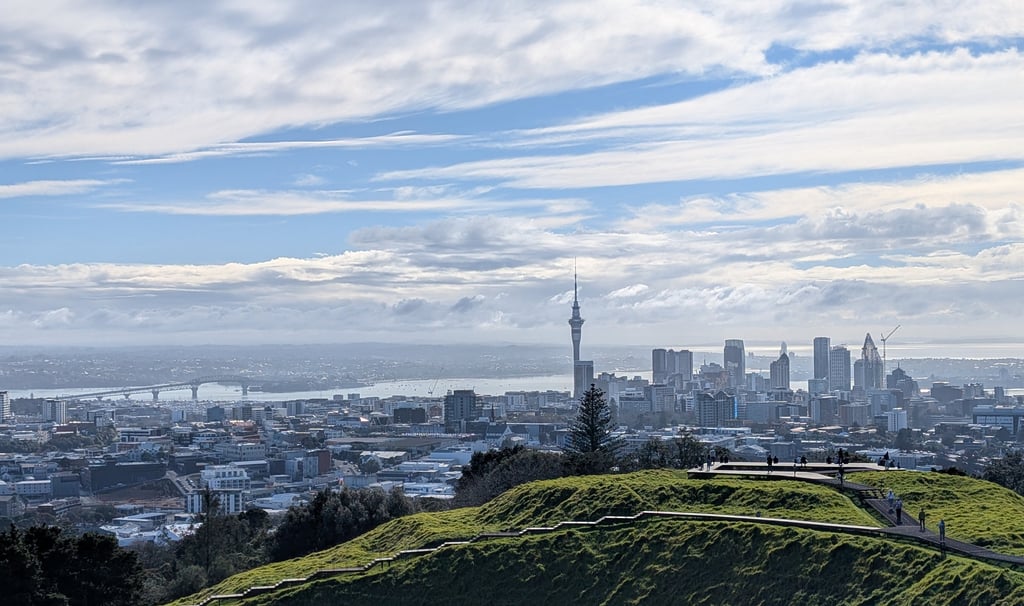
Auckland City (the Central Isthmus): Ponsonby, Grey Lynn, Mount Eden, Mission Bay
Auckland City was the old central council area, and it's the villa-and-cafe heartland most people picture when they imagine Auckland with character homes, walkable streets, and the shortest possible commute into the CBD. Ponsonby and Grey Lynn are the classic inner-city choices, all wooden bungalows and weekend markets, while Mount Eden and Kingsland offer a slightly quieter, still-central alternative (unless the All Blacks are at home defending their 32 year unbeaten Eden Park record!).
Auckland City's boundary also stretches out to the Eastern Bays (Mission Bay, St Heliers, Kohimarama), all beachside suburbs within easy reach of the CBD, plus Remuera and Epsom's leafier, more established streets. It's the most expensive part of the region to rent in, and character homes here often come with the quirks covered in our piece on how NZ housing differs (uninsulated villas, single glazing, cross leases and steep driveways among them).
Suburbs to know: Ponsonby and Grey Lynn for cafe culture and character homes; Mount Eden and Kingsland for a calmer, still-central alternative; Mission Bay and St Heliers for beachside living close to the CBD; Remuera and Epsom for established, leafy streets near top schools.
North Shore City: Devonport, Takapuna, Albany
The North Shore trades a harbour crossing for beaches, space, and a strong reputation for schools. Devonport is the heritage choice, a short ferry ride from the CBD with a genuine village feel, while Takapuna offers a livelier beachside lifestyle with a proper town centre and lake to match its coastline. Further north, Albany has grown rapidly and now offers newer housing, a large retail hub, and the Northern Busway, which meaningfully changes the commute calculation compared to relying on the harbour bridge in peak traffic in a car. The trade-off across the whole Shore is that a bridge or ferry crossing is involved for almost any trip south, and that crossing can turn a short distance into a long commute during rush hour.
Suburbs to know: Devonport for heritage charm and the ferry; Takapuna for beachside living with a full town centre; Albany and surrounds for newer housing and Northern Busway access.
Waitakere City (West Auckland): Titirangi, Henderson, New Lynn
West Auckland trades proximity for space, bush, and a noticeably lower cost of living than the isthmus or the Shore. Titirangi sits right at the edge of the Waitakere Ranges, all native bush and an artsy, slightly bohemian community feel, while Henderson and New Lynn offer more affordable, practical family housing with good access to shopping and public transport. The Ranges themselves bring real character (and stunning west coast beaches like Piha and Karekare within reach) but also mean a noticeably longer motorway commute into the city, and some of the older, hillier parts of the West deserve the same slope stability awareness covered in our hazards and pitfalls guide.
Suburbs to know: Titirangi for bush, arts, and a slower pace; Hobsonville for newer housing; Henderson and New Lynn for more affordable, practical family living with train access into the city.
Manukau City (South and East Auckland): Howick, Pakuranga, Manukau, Papatoetoe
Manukau City was the largest of the old councils by population, and it covers what most people colloquially split into East Auckland and South Auckland, even though rental sites list it as a single region. On the eastern side, Howick has a strong, established community feel with a distinct heritage character, Pakuranga offers practical, affordable family housing, and the Half Moon Bay ferry gives part of this area a direct water commute into the CBD. On the southern side, Manukau has become a genuine secondary city centre in its own right, with its own shopping, business district, and transport hub, while Papatoetoe and Manurewa offer solidly affordable family housing with train links into the CBD. This is also Auckland's most diverse region (both ethnically and economically) and home to Auckland Airport, which matters more than people expect if you're weighing commute times against family flying in and out. The trade-off across both sides is a longer commute into the central city.
Suburbs to know: Howick for community feel and heritage character; Pakuranga for affordable family housing near the water; Manukau for its own city centre and transport hub; Papatoetoe and Manurewa for affordable family housing with train access; Mangere for proximity to the airport.
Papakura, Franklin, and Rodney: Auckland's outer edges
The three remaining regions sit at Auckland's northern and southern edges and were rural districts before the 2010 amalgamation. Papakura, in the far south, offers some of the region's most affordable family housing with train access into the CBD, though the commute is a longer one. Franklin, further south again around Pukekohe, is more rural still, popular with families wanting acreage and a slower pace over proximity to the city. Rodney, to the north, covers the Hibiscus Coast (Orewa, Whangaparaoa) as well as Kumeu and Warkworth, and offers a similar beachy, semi-rural appeal to parts of the North Shore at a lower cost, provided you don't mind a longer motorway commute.
Suburbs to know: Papakura for affordable family housing with train access; Pukekohe (Franklin) for rural space and a lower cost of living; Orewa and Whangaparaoa (Rodney) for a beachy, semi-rural lifestyle north of the city.
Waiheke Island and the Hauraki Gulf Islands
Waiheke sits about 45 minutes from the CBD by ferry and offers a genuinely different pace of life with vineyards, beaches, and a strong local community, at the cost of everything (including a daily commute) revolving around ferry timetables. It suits people who can work remotely or whose commute tolerance is built around boat schedules rather than road traffic, and it's worth knowing about as an option even though most relocating families don't consider it their first port of call.
How Auckland compares to other major cities
If you're moving from London, Los Angeles, Toronto, or Melbourne, it helps to know that Auckland is a strange mix: its greater region covers more ground than most of these cities, despite holding far fewer people. Auckland's Council area spans roughly 4,940 square kilometres and holds around 1.82 million people, a density of only around 370 people per square kilometre (although that density fluctuates hugely depending on area!). Compare that to Greater London's 1,572 square kilometres and 9.1 million people (about 5,800 per square kilometre), the Greater Toronto Area's 7,124 square kilometres and 7.1 million people (roughly 1,000 per square kilometre), or Greater Melbourne's 9,993 square kilometres and around 5 million people (about 500 per square kilometre). Los Angeles is the closest match for sheer sprawl: the city proper alone covers 1,302 square kilometres for 3.9 million people, before you even get to the wider Greater LA area's 18.5 million.
Auckland's own central district (the CBD) covers just 4.4 square kilometres and holds around 38,000 people, a density of roughly 8,600 people per square kilometre, dense by comparison, but a tiny fraction of the overall region. Inner London, by contrast, packs roughly 3.4 million people into about 319 square kilometres (over 10,000 per square kilometre), Toronto's city proper holds about 2.9 million across 630 square kilometres (around 4,600 per square kilometre), and central Melbourne's own council area holds just 150,000 people across 38 square kilometres, similar in scale to Auckland's CBD despite Melbourne's much larger metro population.
The practical takeaway: Auckland has a small, dense centre surrounded by a huge, low-density sprawl, so a "20 minute drive" here often covers a lot more ground, and a lot more variety in what you'll find, than the same drive time would in a more compact city.

What are the best areas to live in Auckland?
Auckland is officially split into 8 regions on the property and rental sites you'll be searching (Auckland City, North Shore City, Waitakere City, Manukau City, Papakura, Franklin, Rodney, and Waiheke Island/the Hauraki Gulf Islands), based on the old councils that existed before Auckland became one super-city in 2010. Each has its own character, cost, and commute, and the best one for you depends on budget, commute, and lifestyle more than any single suburb being objectively "best."
Auckland isn't a single city in the way a lot of overseas families picture it - one of the biggest misconceptions people arrive with is that it's a "small city", something on the scale of a large regional centre back home. It isn't.
Auckland is a sprawling, low-density region, considerably larger by area than London or Toronto despite having a fraction of the population, and that gap between reputation and reality catches a lot of people off guard once they're actually here trying to commute across it. Understanding the shape of the place (very thin and very long!), and specifically the 8 regions you'll actually see as filter categories on Trade Me Property and other rental sites, before you start house hunting saves a lot of wasted viewings on properties that were never going to suit your commute or budget. This article works through those 8 regions, then flags a handful of specific suburbs worth knowing by name within each, before coming back to just how big Auckland really is compared to the cities you might be leaving behind. You can read more about strategy for finding a house in Auckland here, and if you want to get rid of the hassle and hand over the search to someone who knows Auckland inside-out, my home search service is made just for you!
For a much deeper breakdown, including price ranges, commute maps, and school zoning by suburb, our free Auckland House-hunting Guide covers all 8 regions at a glance, or you can get access to the full, in-depth version with suburb-by-suburb profiles. If rent is your main concern, our free download of average rental prices for 3 and 4 bedroom homes by neighbourhood is also worth grabbing before you start budgeting.
If you're looking for an overview of all of New Zealand, not just Auckland, then I've compared every region of the country for you in this article, and for the full regional rent breakdown, how much is rent in New Zealand has the current 2026 figures.
The biggest misconception: Auckland is a "small city"
New Zealand's small population leads a lot of people to assume Auckland must be a small, easy-to-cross city, similar in scale to somewhere like Cambridge or Sacramento. In reality, Auckland's urban footprint is vast: its greater region covers more ground than Greater London, and only Los Angeles among the cities most of our clients come from truly rivals it for sheer sprawl. What that means practically is that "living in Auckland" can mean a 15 minute walk to the CBD, or it can mean an hour's drive each way through some of the country's worst traffic (worth noting that it still may be significantly less traffic than you're used to!) and both of those are entirely normal answers to "where do you live in Auckland." Assuming the whole region is commutable the way a truly small city would be is one of the most common, and most costly, assumptions overseas families make before they've actually seen the place. I talked through this exact misconception, along with a few others, on a recent podcast appearance with NZ Ahead, if you'd like to hear it discussed in more detail.
What this means for your search
None of these regions is objectively better than another, they simply suit different priorities. If a short commute matters most, Auckland City wins outright. If beaches and family space matter more than commute time, the North Shore or the eastern side of Manukau are worth a closer look. If budget is the deciding factor, West Auckland, the southern side of Manukau, or the outer regions (Papakura, Franklin, Rodney) stretch further, often considerably so. It's also worth remembering that these 8 regions aren't neatly divided by a single line on a map, plenty of suburbs sit right on the boundary between two of them and pick up a bit of each one's character, so treat these as starting points rather than rigid categories. Whatever you're weighing, it's worth checking the specific hazards covered in our pitfalls and hazard awareness guide for any address you're seriously considering, since flood, slope stability, and construction era vary as much within a region as they do between them.
Frequently asked questions
What is the best area to live in Auckland for families?
There isn't a single answer, but Devonport, Takapuna, Kohimarama, Pukekohe, Howick, and parts of Auckland City like Mount Eden and Remuera are consistently popular with families for their combination of schools, parks, and community feel. The right one depends heavily on your commute and budget.
Which Auckland region has the shortest commute to the CBD?
Auckland City suburbs like Ponsonby, Grey Lynn, Mount Eden, and Newmarket offer the shortest commutes, since they border the CBD directly. Devonport, on the North Shore, also offers a fast, direct commute by ferry despite being across the harbour.
Is it expensive to live in Auckland?
Auckland is New Zealand's most expensive region to rent in, though costs vary significantly. Auckland City and North Shore suburbs command the highest rents, while West Auckland and the southern side of Manukau are considerably more affordable for a similar amount of space.
Do I need a car if I live in Auckland?
In most outer regions, yes, a car makes daily life considerably easier, though public transport (trains in Manukau and the West, the Northern Busway on the Shore, ferries from Devonport, Half Moon Bay, and Waiheke) covers more ground than newcomers often expect.
Which parts of Auckland are best for shorter-term or temporary accommodation while house hunting?
Auckland City suburbs close to the CBD tend to have the widest range of short-term rentals and Air Bnbs, which also puts you within easy reach of viewings across several regions at once during the search itself, before you've committed to a specific area to live long-term. If you want to weight up the options for where to stay when you first arrive vs having a house ready and waiting for you, I've discussed the pros and cons here.
More questions?
Auckland rewards a bit of upfront orientation before you start viewing properties, since the region you choose shapes almost everything else about daily life here. If you'd like help matching a specific area to your own priorities, you can book a free, no obligation 20 minute chat with me here.